The Beginner's Guide to Desk Plants: Which Ones Thrive in Low Light
A desk is not an obvious home for a houseplant. Light arrives late and filtered, through a window, a blind, and sometimes a filing cabinet. The radiator under the sill runs all winter. Nobody opens the window because the air conditioning is on. And yet a handful of plants treat those conditions as perfectly reasonable, because they evolved on forest floors in the shade of much taller trees. Choose the right ones and a dim desk becomes one of the easiest places in the house to keep something alive.
This guide is about genuinely low light: a north-facing window, a desk several metres from any glass, or a room where the electric light is on more than the sun is. The short version — choose carefully, then interfere far less than you think you should.
First, work out how much light you actually have
Before you buy anything, watch your desk for a day. Look at it mid-morning and again mid-afternoon. A sharp, defined shadow means bright light. A soft, blurry shadow means moderate. No shadow at all, at any point in the day, means low — which is where most desks sit.
Direction matters, but distance matters more. A north-facing window gives steady, gentle light with no direct sun, and plants placed close to the glass will do surprisingly well there. An east-facing window adds a couple of hours of soft morning sun. South and west windows are brighter, but only in the first metre or so; move two or three metres back into the room and you are in low light again.
Phone light-meter apps vary in accuracy, but they are consistent enough to compare one spot with another. Take a reading at the brightest point of your day, note it, and use it as a baseline if you move a plant later.
The plants that genuinely cope
These are the ones worth buying for a dim desk. All are widely available, none needs much attention, and all will tolerate a spot where the light is never direct.
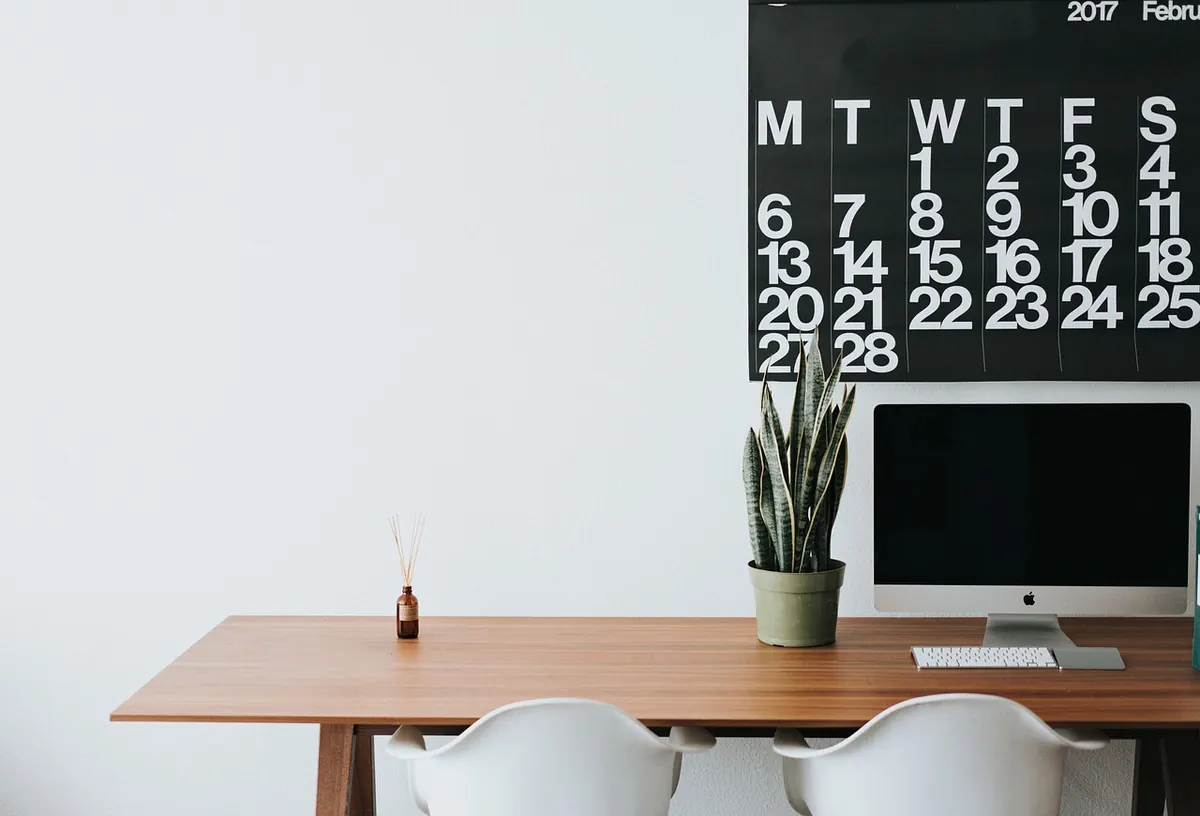
- Snake plant (Dracaena trifasciata) — upright and architectural, with leaves that store water. It forgives a missed fortnight without complaint.
- ZZ plant (Zamioculcas zamiifolia) — glossy, waxy leaves and thick underground rhizomes. Growth is slow in low light, which is normal rather than a sign of sulking.
- Heartleaf philodendron — trailing stems that spill neatly over a shelf edge. One of the most forgiving plants you can buy.
- Pothos, or devil's ivy — a similar habit and equally tolerant, though it will grow long and bare between leaves in deep shade. Trim it and it thickens up; cuttings root easily in a glass of water.
- Spider plant — arching striped leaves and near-indestructible. It dislikes the fluoride in most tap water, which shows up as brown tips, so filtered or rainwater helps.
- Cast iron plant (Aspidistra) — a Victorian parlour staple for good reason. Deep green, unhurried, almost impossible to kill.
- Peace lily — flowers better with more light but survives low, and it droops visibly when thirsty, which makes it a useful teacher.
What to leave on the shelf: succulents, cacti, culinary herbs and most flowering plants. They need direct sun, and on a dim desk they will stretch, pale and eventually collapse, however careful you are with water.
Watering: where most low-light plants die
A plant in low light grows slowly, so it drinks slowly. The compost stays damp for longer, roots sit in wet soil, and rot sets in before the leaves give anything away. Almost every struggling desk plant has been overwatered rather than underlit.
Water on evidence, not on a schedule.
- Push a finger two or three centimetres into the compost. If it feels damp, wait.
- Treat every care label as advice for bright conditions, and expect to water less often than it suggests.
- Water in the morning so any splashes on the leaves dry during the day.
- Empty the saucer twenty minutes after watering.
- Use a pot with a drainage hole. If you love a decorative outer pot, keep the plant in a nursery pot inside it and lift it out to water.
- Cut back in winter. Most plants slow to a near stop and need roughly half as much.
Yellowing lower leaves and soft, collapsing stems mean too much water. Crisp brown edges, curling leaves and a pot that feels light in the hand mean too little. A peace lily that droops and then springs back within an hour of watering was simply thirsty. Brown tips on a spider plant, on the other hand, usually point to water quality or dry air rather than your routine.
Placement, pots and the small details
Where the pot sits matters as much as what is growing in it.
- Keep plants out of the direct path of radiators, air-conditioning units and draughty doors.
- Rotate each pot a quarter turn every week so growth stays even rather than leaning towards the window.
- Wipe leaves with a damp cloth every few weeks. Dust blocks light, and a dusty plant in a dim room is working at a real disadvantage.
- Group two or three pots together; they create a slightly more humid pocket of air around one another.
- On a standing desk, weight and wobble matter. Small pots, stable bases, no tall glass vases.
An ordinary desk lamp will not support growth on its own, but a small LED grow bulb in a normal fitting is a practical upgrade for a windowless office. Eight to ten hours a day is plenty.
Feeding and repotting, gently
Slow growth is normal, not a symptom. Feed with a weak dose of general houseplant fertiliser every six to eight weeks through spring and summer, and not at all in the middle of winter. Repot only when roots appear through the drainage holes; a slightly snug pot is easier to keep at the right moisture level than a large one full of wet compost.
Start with two pots, then stop
Choose two plants with different shapes — an upright snake plant and a trailing pothos, for example — so the desk looks composed rather than crowded. Keep both in pots with drainage holes, water only when the top of the compost is dry, and clean the leaves now and then.
If new leaves come through small and far apart over a couple of months, move the plant closer to the window. If leaves yellow, water less. That is very nearly the whole method. The most common problem with desk plants is not darkness. It is kindness.
Photo: StockSnap / Pixabay